

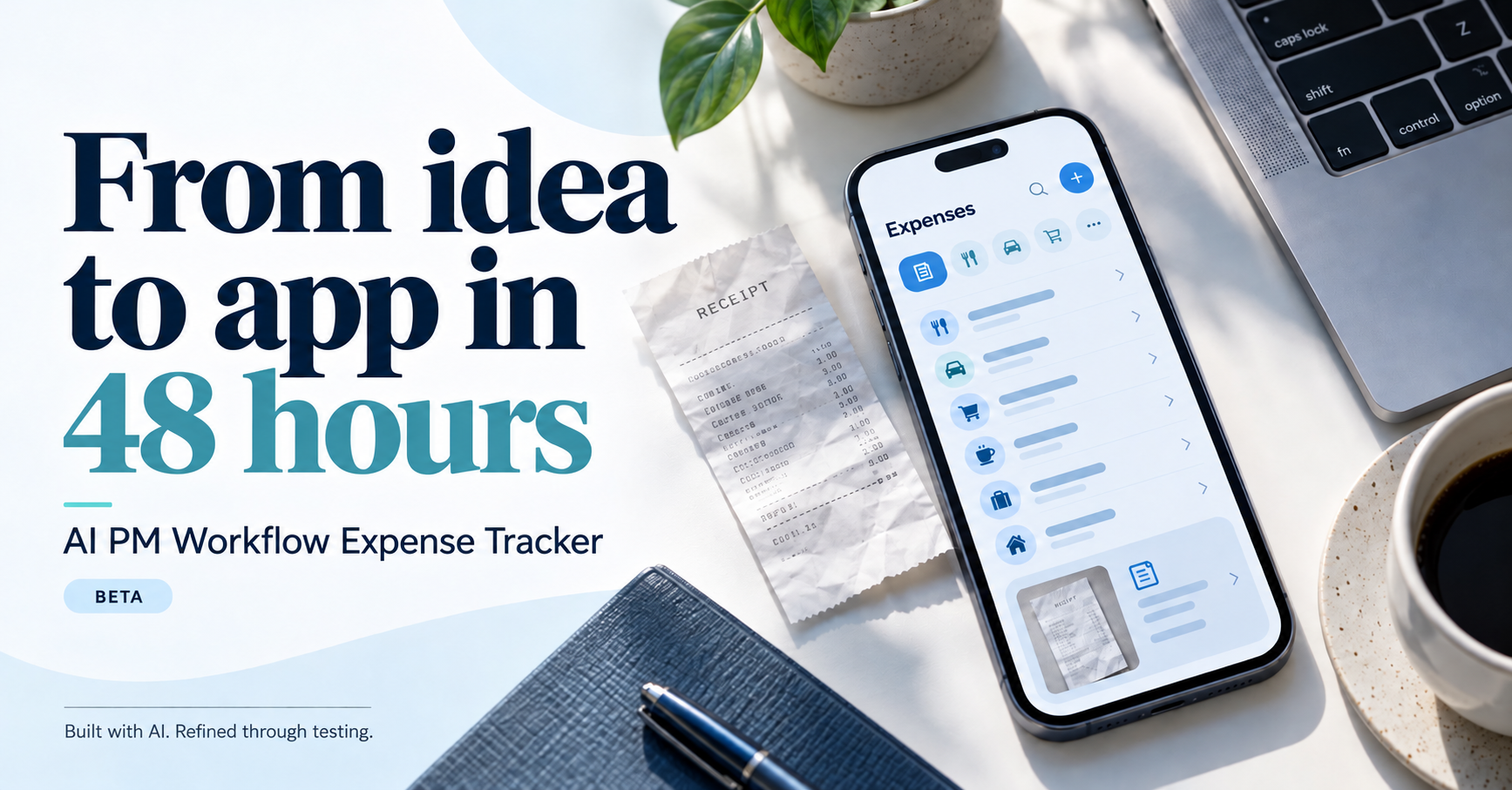
Today, I released the first beta version of AI PM Workflow – Expense Tracker, v0.1.0-beta.1. What I did have was a practical problem I understood and an idea of how I wanted to solve it. Could I photograph a receipt, keep the image, turn its contents into an expense record and produce something useful for calculations, printing and recordkeeping? With the help of ChatGPT and Codex, that idea became a working web app. The initial beta took shape within 48 hours. Testing, refinements and additional features have continued since that first release.
The bigger opportunity: This expense tracker is just one example of what is possible with the help of AI for people who understand a business process but do not have the skills to build their own automated workflow system. We encounter tasks that are repetitive, time-consuming or poorly served by the tools available to us. We often know what would make the process better, but turning that idea into something tangible has been a significant barrier. AI gives us a more accessible route to creating a prototype, trying it in practice and refining it through feedback. For project managers, business analysts, small business owners and people who know their own workflows, that opens up opportunities to explore ideas that might previously have remained on a wish list.
What does this mean? Understanding the business requirement and being able to communicating these accurately has become more important than personally knowing how to write the code. I needed to explain what the tool should achieve, who would use it, what information mattered and how the result should be checked. AI helped translate that into software. My responsibility was to assess whether the result actually met the need. That is familiar territory in project management: define the requirement, communicate it clearly, review the outcome and refine the solution. AI can also produce the wrong thing quickly when instructions are unclear. Technical quality, security and maintenance still matter. The opportunity is to make it easier to start, while keeping human judgement and verification central to the process.
From an idea to something people can try: The app now brings together receipt capture, an expense ledger, itemised calculations and export options, alongside account and privacy controls. Reports include receipt subtotals, page totals and a route back to the web app. My hands-on testing has included Safari on an iPhone 16 Pro Max. All 13 automated check groups passed on the latest rerun. A public testing report distinguishes those results from the 62 formal hands-on checks still outstanding, so users can undertake their own structured testing. A practical observation from my testing: in low light, taking the photograph in the phone’s Camera app and then uploading it through Choose photograph appears to give better results. The web app cannot force the flash on when taking a receipt photograph from inside the app. It remains a beta app, and users should check their figures and keep separate records. A working prototype is a starting point for further testing and improvement. The app contains more detailed information about its features, how to use it, privacy arrangements and the testing process:
CLICK HERE FOR THE THE WEB APP: AI PM Workflow Expense Tracker (On an iPhone, you can add a shortcut using Safari → Share → Add to Home Screen.)
CLICK HERE FOR THE INFO: Read the Expense Tracker Public Test Report Read the Expense Tracker Privacy Policy
For me, this experience has shown how AI can help someone move from understanding a problem to building a practical tool to address it in 48 hours without any prior coding experience.
What business problem do you understand well enough to turn into a useful tool with AI? #AI #ChatGPT #Codex #ProjectManagement #BusinessAnalysis #LearningByDoing